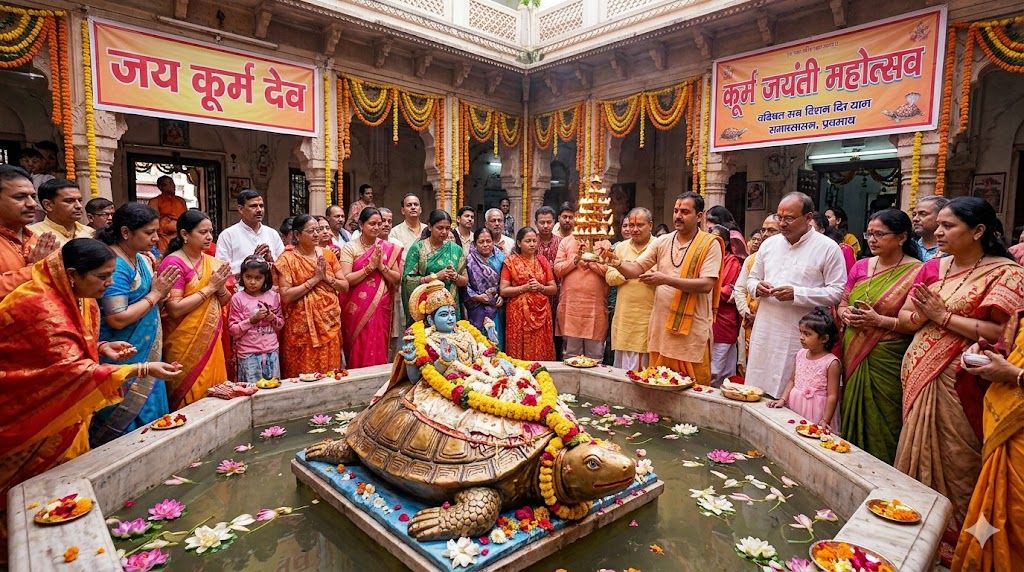
Kurma Jayanti is celebrated as the birth anniversary of Lord Kurma, one of the Ten Avatars of Lord Shri Vishnu. He is the second avatar of Shri Hari during the Satya Yuga. It is observed on Purnima of the Hindu month of Vaishakha, which typically falls in April or May of the Gregorian calendar. This year, it falls on May 1, 2026.
Overall, Kurma Jayanti is a significant occasion for the followers of Lord Vishnu and is celebrated with great devotion and enthusiasm in different parts of India.
So, let’s get to know more about the Date, Rituals, and Significance of Kurma 2026.
Kurma Jayanti 2026: Date and Timings
This year, Kurma Jayanti falls on Friday, May 1, 2026
Kurma Jayanti Muhurat: 04:31 p.m. to 07:07 p.m.
- Purnima Tithi Starts: 09:12 p.m. on April 30, 2026
- Purnima Tithi Ends: 10:52 p.m. on May 01, 2026
Significance of Kurma Jayanti
Kurma Jayanti has great significance for the devotees of Lord Vishnu, and particularly for those who follow the Vaishnavism tradition.
Kurma Jayanti marks the divine birth of Lord Vishnu in his Kurma (tortoise) incarnation, the second of his Dashavatara during the sacred Satya Yuga. On this auspicious day, Vishnu temples come alive with special pujas and devotional celebrations.
The festival of Kurma Jayanti holds immense significance for the devotees of Lord Shri Hari. On Kurma Jayanti, devotees offer prayers and perform puja rituals to Lord Kurma. They also observe fasts, chant mantras, and sing bhajans in honour of the deity. Some temples also conduct special ceremonies and processions on this day. It is believed that by observing fasts, performing puja rituals, and chanting mantras of Shri Narayan on this day, one can gain blessings, wisdom, and stability in career.
Kurma Jayanti is a reminder of the importance of devotion and faith in Lord Shri Vishnu. It is believed that by surrendering oneself to the divine will, one can overcome all obstacles and achieve higher states of mind.
Also Read: Importance of Vaisakh Purnima
Legend Behind Kurma Jayanti
According to Hindu mythology, Lord Vishnu took the form of a tortoise, Kurma, to support Mount Mandara during the churning of the ocean by the gods and demons to obtain the nectar of immortality. The Kurma avatar is also believed to represent stability, perseverance, and protection.
According to the legend of Samudra Manthan (the cosmic ocean churning), when Mount Mandarachala began to sink, Lord Vishnu manifested as a giant tortoise to support the mountain on his sturdy back. This extraordinary form, known as Kurma Avatara or Kachchhapavatara, symbolizes steadfastness, balance, and the divine strength that upholds the universe. Lord Kurma is considered one of Lord Shri Vishnu’s ten avatars and is believed to have appeared to help the gods and demons churn the ocean to obtain the nectar of immortality.
Kurma Jayanti Celebrations
Kurma Jayanti is a day when Hindu devotees religiously worship the second incarnation of Vishnu, Sri Hari, with enthusiasm and dedication. Temples dedicated to Lord Vishnu all over the country organise special pujas and ceremonies on this day. The Sri Kurman Sri Kurmanatha Swamy Temple in Andhra Pradesh hosts grand celebrations, attracting devotees from far and wide.
In Conclusion,
Kurma Jayanti reminds devotees of Lord Vishnu’s unwavering support and cosmic balance. Celebrating this day with prayers and puja invokes his blessings for stability, perseverance, and protection, inspiring us to remain steady through life’s challenges—just as the divine tortoise upheld the churning of the universe.