
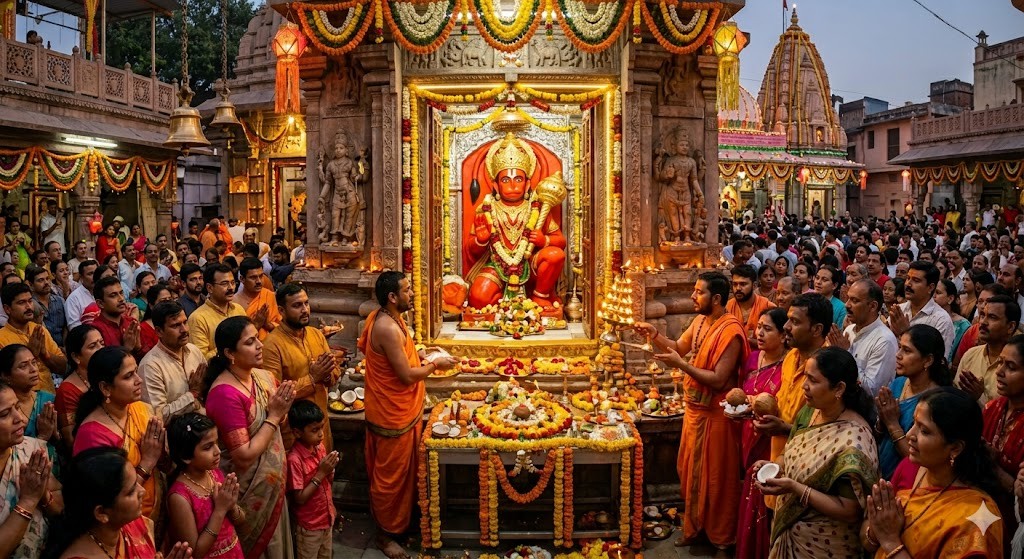
Along with the birth of Lord Shri Rama, which is celebrated as Ram Navami, Hanuman Jayanti is also a special festive day for all Hindus, and especially for Hanuman Bhakhts. Hanuman Jayanti is not only celebrated in India but also observed by His devotees all around the world. This festive is dedicated to the birth of Lord Jai Hanuman, the ardent devotee of Lord Shri Rama. He is the embodiment of strength, devotion, and humility, showing the path of in-depth devotion to His Bhakhts. Shri Hanuman, an ardent devotee of Lord Rama and Sita himself, is also known as Anjaneya.
Observed with great reverence across India, this day is marked by prayers, chanting of Hanuman Chalisa and Sundar Kanth Path, temple visits, and special rituals, as well as special offerings of Til oil, Sindoor, and Prasad, especially Motichur Laddu. For devotees, Hanuman Jayanti is not just a celebration of a divine birth but also a reminder of courage, strength, loyalty, devotion, and faith.
Hanuman Jayanti 2026: Date, Muhurat, and Timings
This year, 2026, Hanuman Jayanti will be observed on Thursday, April 2, 2026, which falls on Chaitra Purnima, the full moon day of the Chaitra month according to the Hindu lunar calendar.
- Purnima Tithi Begins – 07:06 a.m on Apr 01, 2026
- Purnima Tithi Ends – 07:41 a.m on Apr 02, 2026
Find Out Date and Muhurat of Ram Navami 2026
Devotees wake up early, take a holy bath, and observe fasts while engaging in spiritual rituals dedicated to Lord Hanuman Ji. The most auspicious time for puja is during sunrise as it is believed that Lord Hanuman’s birth took place during sunrise
Significance of Hanuman Jayanti
Hanuman is revered as the symbol of unshakable devotion (bhakti) and incredible strength (shakti). His presence in the Ramayana as the loyal follower of Lord Rama depicts how selfless service and humility can make one divine. Worshipping Lord Hanuman on this day is believed to remove fears, eliminate negative influences (shani dosha, evil spirits), and bless devotees with courage, wisdom, and protection.
Also, worshipping Shri Hanuman protects the devotees from all kinds of evil forces and malefic energies. Moreover, reciting the Sundara Kanda Path on this day helps to regain the lost confidence of the devotees. It also calms the mind and fills devotees with the courage and strength to embark on their journey after failure. The scriptures also say that chanting the Hanuman Chalisa on Hanuman Jayanti helps overcome life’s struggles and uplifts one in their spiritual journey.
Rituals and Traditions
Hanuman Jayanti is observed with great devotion and bhakti; however, religious discourses and traditions may vary across regions, from north to south, but some common practices remain common, which include:
- Fasting (Vrat): Many devotees keep a day-long fast, consuming only fruits, milk, and sacred prasadam.
- Recitation of Hanuman Chalisa and Sundar Kand: Temples and homes resonate with the chanting of Hanuman Chalisa and the recitation of Sundar Kand from the Ramayana.
- Temple Darshan: Hanuman temples are beautifully decorated, and devotees visit these temples to offer sindoor, jasmine, or til oil, and flowers to the deity.
- Processions and Bhajans: In several regions, processions and devotional singing sessions (bhajans, kirtans) are organized in honor of Jay Bajrangbali.
- Charity and Seva: Offering food and helping the needy is also considered highly auspicious on this day.
Mythological Story Behind Shri Hanuman’s Birth
According to Hindu scriptures, Hanuman is the son of Anjana and Kesari, therefore also known as Kesarinandan and Anjaneya. Moreover, He is blessed by the Wind God, Vayu, who played a divine role in his birth. And hence, Lord Hanuman is also called Vayuputra. Legends say that when King Dasharatha of Ayodhya performed a sacred ritual to beget sons, a portion of the divine kheer was carried by Vayu to Anjana, leading to Hanuman’s birth.
From childhood, Shri Hanuman displayed extraordinary strength and mischievousness. One famous story tells us that young Hanuman, mistaking the rising sun for a ripe fruit, leaped into the sky to eat it! This divine leap revealed his boundless energy and fearlessness, qualities that would later help Lord Shri Rama in his battle against Ravana.
Concluding the Day – Jai Hanuman
Hanuman Jayanti is more than a festival—it is an occasion to reconnect with the values of faith, service, and devotion. By remembering Shri Hanuman’s life and chanting his name, devotees are inspired to cultivate courage, humility, celibacy, and dedication in their own lives. As millions bow to Sankat Mochan Hanuman, they find not just divine blessings but also the strength to overcome challenges and move forward with unwavering faith.