
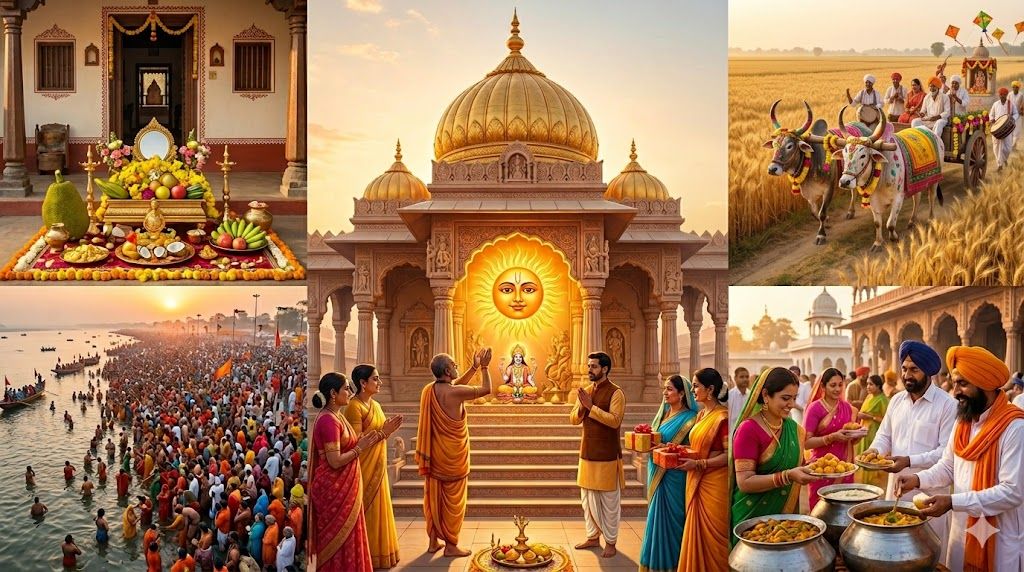
Mesha Sankranti, also known as Mesha Sankramana or Aries Sankranti, is a Hindu festival that marks the beginning of the new year according to most Hindu Solar Calendars in many parts of India, particularly in the regions of Odisha, West Bengal, and Assam.
According to astrology, Mesha Sankranti falls on the day when the Sun enters the Aries zodiac sign (Mesha in Sanskrit) from Pisces (Meena). It usually occurs around the 14th or 15th of April in the Gregorian calendar. Popularly known as Vaisakha Sankranti, Mesha Sankranti is the day of the Solar New Year. Therefore, in several regions, this method of the calendar is adopted and is considered a significant occasion. This day is considered highly auspicious to worship the Sun god.
On this day, people take a dip in holy rivers, offer prayers to the Sun God, and perform various rituals to seek blessings and prosperity for the coming year. In some regions, people also decorate their houses with flowers, rangolis, and lamps to celebrate the occasion. Especially, the natives of Bihar state in India celebrate this day as Satuan with holy baths and eating sattu and jaggery.
Also Read: Ugadi 2026: Hindu New Year according to Lunar Calendar
So now, let’s find out when Mesha Sankranti 2026 is. Significance of Mesha Sankranti and the auspicious timings in detail.
Mesha Sankranti 2026: Date, Muhurat, and Timings
This year, Mesha Sankranti will be celebrated on Tuesday, April 14, 2026
- Mesha Sankranti Punya Kala: 06:20 a.m. to 01:52 p.m.
- Mesha Sankranti Maha Punya Kala: 07:32 a.m. to 11:45 a.m.
- Mesha Sankranti Moment: 09:39 a.m.
Significance of Mesha Sankranti
Mesha Sankranti is an important festival in Hinduism as it marks the beginning of the new year in some regions of India. The festival is significant for various reasons. Let’s find out how?
Arrival of Spring
Mesha Sankranti marks the beginning of the Spring season in India. It is a time when nature is at its best, with trees and flowers blooming and the weather becoming warmer. The festival is a celebration of the new season and a new beginning.
Sun Worship
Vaishakh (Mesha) Sankranti is also a day to offer prayers to the Sun God. The Sun is considered to be a symbol of power, strength, and wisdom in Hinduism, and offering prayers to the Sun God is believed to bring good health, prosperity, power, and success.
Agricultural Significance
In rural areas, Mesha Sankranti is celebrated as a harvest festival as it marks the end of the Rabi crop season and the beginning of the Kharif crop season. Farmers offer prayers to the Sun God for a good harvest and prosperity.
Astrological Significance
The movement of the Sun from Pisces to Aries is considered to have astrological significance as it marks the beginning of the new zodiac year. The day is also believed to be auspicious for starting new ventures, making investments, and buying new assets such as property.
Overall, Mesha Sankranti is a festival that signifies new beginnings, prosperity, and growth. It is a day to offer gratitude to the Sun God and seek blessings for a bright future.
Also Read: Importance of Nav Grah Shanti Puja
What are the Rituals Performed on Mesha Sankranti
Mesha Sankranti is celebrated with various rituals and customs in different regions of India. Some of the common rituals performed on this day are
Holy Dip
Taking a dip in holy rivers like the Ganga, the Yamuna, or the Godavari is considered auspicious on Mesha Sankranti. Devotees believe that taking a dip in these rivers on this day washes away all sins and brings good luck and health.
Worshipping Surya Devta
The Sun God is worshipped on this day as it is believed that the Sun enters the zodiac sign of Aries on this day. Devotees offer water, flowers, and fruits to the Sun God and chant mantras to seek blessings for a prosperous life.
Charity
Giving charity or donating food, clothes, or money to the needy and poor is considered auspicious on Mesha Sankranti. It is believed that donating on this day brings good karma and removes obstacles in life.
Rangoli
People decorate their homes with colourful rangolis made with rice flour, turmeric, and other colours. It is believed that making rangolis on this day brings good luck and prosperity.
Feasting
Mesha Sankranti is also a day for feasting and enjoying traditional delicacies. In some regions, special dishes like pitha, chira, and payesh are prepared and shared with family and friends.
Overall, Mesha Sankranti is a day of new beginnings, blessings, and prosperity. People perform various rituals and customs to celebrate the occasion and seek blessings for a prosperous future.