
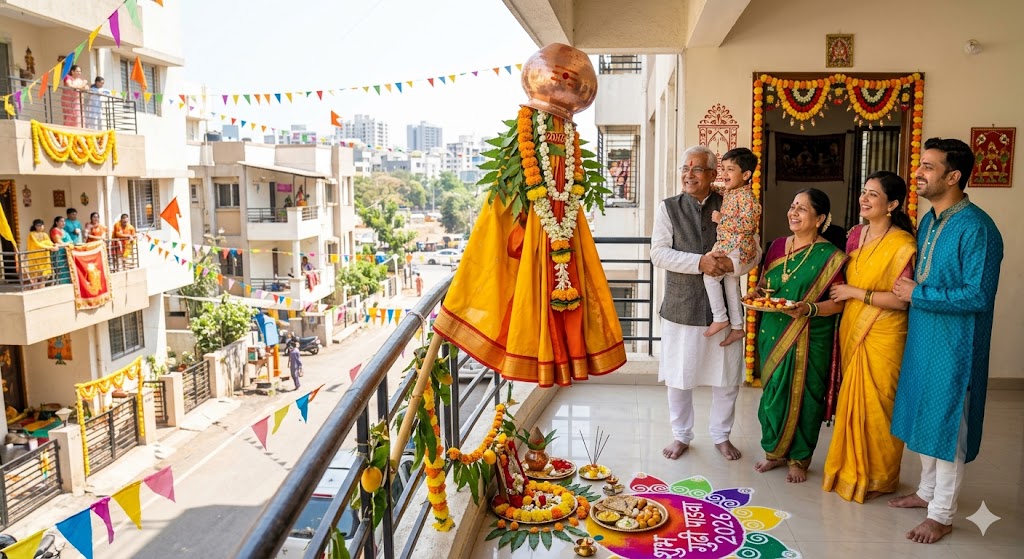
Gudi Padwa, a vibrant festival of Maharashtra, marks the beginning of the Hindu New Year and the onset of spring. It’s a time when streets shimmer with colorful rangolis, the skies flutter with the traditional Gudi flags, and hearts brim with hope and celebration. Observed with immense enthusiasm, Gudi Padwa is not just a seasonal celebration but a powerful symbol of victory, prosperity, and renewal.
Interestingly, the same day is also known as and celebrated as Ugadi in the Deccan states of India such as Karnataka, Telangana, and Andhra Pradesh, while in North India, it marks the beginning of Chaitra Navratri, which is celebrated for nine days dedicated for the devotion to Maa Shakti, fasting, and the ritualistic consumption of neem and mishri concoction as a symbolic cleanse.
Also Read: Ugadi 2026 – Harvesting to Celebrations
So, let’s get to know more about the Date, Rituals, and Significance of Gudi Padwa 2026.
Gudi Padwa 2026: Date, Muhurat, and Timings
In 2026, Gudi Padwa will be celebrated on Thursday, March 19.
- Pratipada Tithi Starts: 9:22 p.m on March 18, 2026
- Pratipada Tithi Ends: 7:22 p.m on March 19, 2026
This time is considered highly favorable for performing rituals, hoisting the Gudi, and beginning new ventures, aligning with the belief that Gudi Padwa ushers in good fortune.
Find out auspicious temples to visit during Chaitra Navratri 2026
Significance of Gudi Padwa
Gudi Padwa is deeply rooted in cultural, agricultural, and historical significance. It marks the first day of the Chaitra month in the Hindu lunisolar calendar and is believed to be the day when Lord Brahma created the universe. Farmers celebrate it as a harvest festival, welcoming the bounty of the Rabi crops.
The term ‘Gudi’ refers to a bamboo stick adorned with a bright silk cloth, neem leaves, sugar crystals, and a garland, topped with a silver or copper pot. Hoisting the Gudi outside homes is believed to ward off evil and invite success, peace, and prosperity.
Gudi Padwa 2026 Rituals and Traditions
- Cleaning and Decorating the Home: Families begin the day by cleaning their homes and decorating entrances with rangolis and floral garlands.
- Raising the Gudi: A beautifully decorated Gudi is hoisted outside the home, usually on the right side of the main entrance, symbolizing victory and welcoming divine blessings.
- Oil Bath and New Attire: A sacred oil bath is taken early in the morning, followed by wearing new traditional clothes.
- Special Dishes: Delicious festive foods like Puran Poli, Shrikhand, and Katachi Amti are prepared and enjoyed with loved ones.
- Puja and Offerings: Special prayers are offered to deities, particularly Lord Brahma and Vishnu, to seek prosperity and happiness for the year ahead.
Gudi Padwa – What Does the Legend Say?
Gudi Padwa is associated with the legend of Lord Rama’s return to Ayodhya after his victory over Ravana. The hoisting of the Gudi is symbolic of his triumph and the joyous welcome he received. Another legend connects the festival to the victory of the great Maratha warrior Chhatrapati Shivaji Maharaj, who hoisted the Gudi as a symbol of valour and freedom after significant victories.
In Vedic tradition, it is also believed that on this day, Lord Brahma created time and the universe, initiating the cycle of creation.
Gudi Padwa – Different Names in Different Regions of India
This festival day is celebrated as the beginning of a new year in various parts of India. Celebrated on the same day, Gudi Padwa is known by different names in the various regions of the sub-continent of India.
- Navreh in Kashmir
- Thapna in Rajasthan
- Ugadi in the southern parts of India
- Samvatsar Padvo among Konkanis in Goa and Kerala
- Konkanis in Karnataka know it as Yugadi
- Sajubu Nongma Padwa in Manipur
- Chheti Chand among Sindhis
- Puthandu in Tamil Nadu
- Baisakhi in Punjab
- Chaitra Navratri begins from this day for North Indians
Also Read: Chheti Chand – The New Year of Sindhis
Conclusion
Gudi Padwa is more than a New Year celebration—it is a festival of hope, victory, and renewal. It inspires people to shed the burdens of the past and look forward with courage, energy, and optimism. As homes sparkle with joy and streets echo with festive cheer, Gudi Padwa reminds us of the power of triumph, the importance of traditions, and the endless promise of new beginnings.