The fifth day of Navratri is dedicated to Maa Skandamata, the fifth manifestation of Mata Durga. She is revered as the divine mother of Lord Kartikeya, who is also known as Skanda. Because she holds the infant Kartikeya in her lap, she came to be known as Skandamata, which literally means ‘Mother of Skanda’.
Among the nine forms of Mata Durga worshipped during Navratri, Maa Skandamata represents the nurturing and protective aspect of the divine mother. Devotees believe that worshipping her not only brings the blessings of the goddess but also the grace of Lord Kartikeya, who sits on her lap.
Her worship symbolizes the power of motherhood, compassion, and divine protection.
Divine Appearance of Maa Skandamata
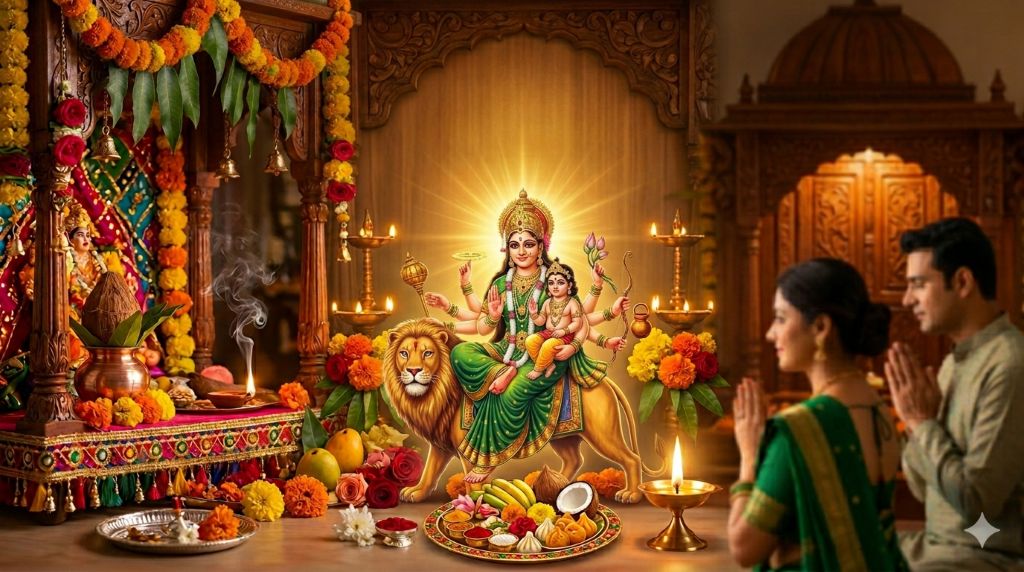
Maa Skandamata is depicted as a serene and radiant goddess seated on a lotus flower, which is why she is also called Padmasana Devi. She rides a lion, symbolizing courage and power.
Her divine form has four arms.
Two hands hold lotus flowers, representing purity and spiritual awakening.
One hand carries baby Kartikeya, while the other remains in the Abhaya Mudra, blessing devotees with protection and fearlessness.
Her calm and compassionate expression reflects the unconditional love of a mother for her children.
Story Behind Maa Skandamata
The story of Maa Skandamata is deeply connected with the birth of Lord Kartikeya and the destruction of the demon Tarakasura.
According to Hindu scriptures, the powerful demon Tarakasura received a boon that only the son of Lord Shiva could kill him. Confident that Lord Shiva would never marry again after the death of Sati, Tarakasura began to terrorize the universe.
However, Maa Parvati performed intense penance and eventually married Lord Shiva. From this divine union, Kartikeya was born. He later became the commander of the gods and defeated the demon Tarakasura, restoring peace in the universe.
After giving birth to Kartikeya, Goddess Mata Parvati became known as Skandamata.
Significance of Worshipping Maa Skandamata
Worshipping Maa Skandamata during Navratri is believed to bring wisdom, prosperity, and spiritual growth. She represents the compassionate and nurturing energy of the divine mother who guides her devotees on the path of righteousness.
Devotees believe that sincere prayers to Maa Skandamata can remove obstacles, calm the mind, and bring peace into one’s life. Her blessings are especially sought by couples wishing for children, as she symbolizes motherhood and fertility.
Spiritually, she is associated with higher consciousness and purity, helping devotees progress toward inner awakening.
Puja Vidhi for the Fifth Day of Navratri
Devotees begin the day early with a ritual bath and wear clean or traditional clothes before starting the puja.
An idol or image of Maa Skandamata is placed on the altar, and a ghee lamp is lit. Devotees offer flowers, fruits, incense, sweets, and vermillion to the goddess while chanting her mantras.
Bananas are considered a particularly auspicious offering to the goddess on this day.
The Durga Saptashati or other sacred hymns dedicated to the goddess are recited, and devotees perform evening aarti to conclude the worship.
Mantra for Maa Skandamata
One of the most commonly recited mantras for Maa Skandamata is:
ॐ देवी स्कन्दमातायै नमः।
Chanting this mantra with devotion is believed to bring divine blessings, spiritual clarity, and protection from negative influences.
Color of the Fifth Day of Navratri
The color associated with the fifth day of Navratri is often considered green in many traditions. Green symbolizes growth, harmony, and renewal, representing the nurturing nature of Maa Skandamata.
Devotees often wear green clothes and decorate their homes or temples with green elements to honor the goddess.
Blessings of Maa Skandamata
Devotees believe that Maa Skandamata blesses her followers with peace, prosperity, and spiritual wisdom. Her worship helps devotees overcome challenges and progress on the path of devotion and knowledge.
Because she embodies motherly love, many devotees pray to her for protection, family happiness, and the well-being of their children.
Her divine presence reminds us that the power of a mother’s love is both gentle and immensely powerful.
FAQs
Why is the fifth day of Navratri dedicated to Maa Skandamata?
The fifth day of Navratri is dedicated to Maa Skandamata because she represents the fifth form of Goddess Durga and symbolizes motherhood, protection, and wisdom.
Who is Skandamata?
Skandamata is the mother of Lord Kartikeya, also known as Skanda. She is a compassionate form of Goddess Durga who blesses devotees with prosperity and spiritual growth.
What should be offered to Maa Skandamata?
Devotees typically offer flowers, sweets, incense, and fruits. Bananas are considered especially auspicious offerings during the puja.
What is the mantra of Maa Skandamata?
The commonly chanted mantra is
ॐ देवी स्कन्दमातायै नमः।
What does Maa Skandamata bless her devotees with?
She blesses devotees with wisdom, peace, prosperity, protection, and fulfillment of wishes, especially related to family and children.