
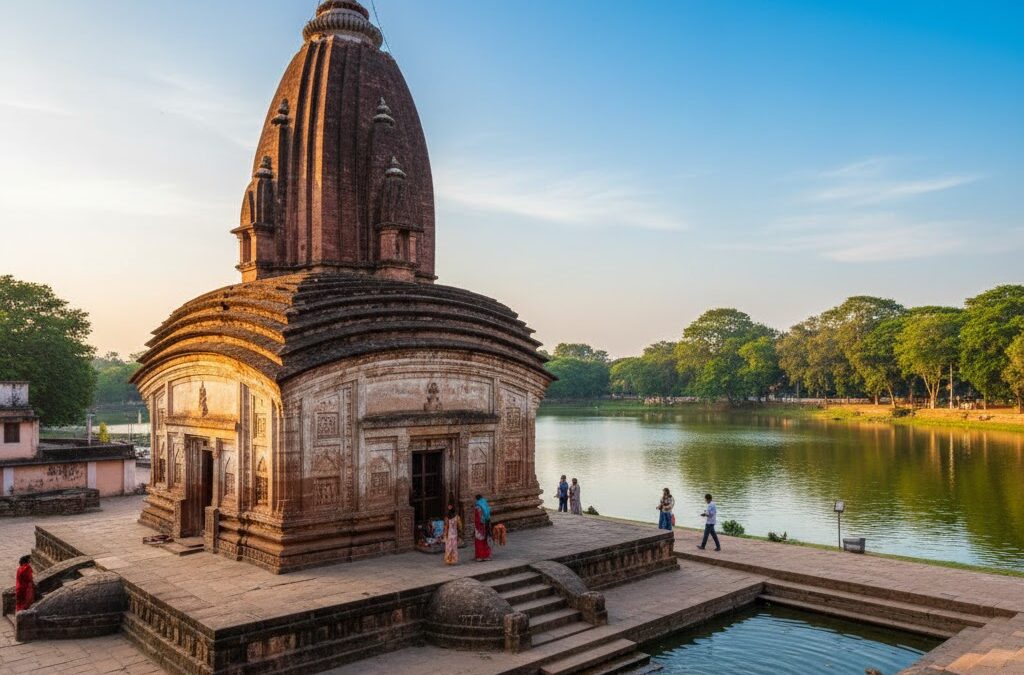
Tripura Sundari Mandir, Tripura
Shaktipeeth Tripura Sundari is a Siddha Shaktipeeth situated in Tripura. It is believed that the fingers of the right foot of Mata Sati fell in the Tripura state.
Since then, this place has been revered as a famous Shaktipeeth in India. As a part of Maa Sati fell near the village Matabari in the ancient city of Udaipur in Tripura. Therefore, Tripura Sundari Mandir is also known as Matabari Temple.
Maa Tripura Sundari is known by many names, such as Mahavidya, Lalita, and Lalitamba. Moreover, this place holds a greater significance for Tantrik Pujas and rituals by agories and priests.
Importance of Tripura Sundari Siddha Shaktipeeth
It is believed that the worship of Maa Lalita never goes in vain. Maa Lalita or Mata Tripura Sundari, who is a part of the Ten Mahavidyas, immediately removes all the troubles and sufferings of her devotees. Maa Lalita is also revered as the divine deity of Sri Vidya. Shaktipeeth Tripura Sundari is also known as Kurma Peeth since the temple, situated on a hillock, which looks like a tortoise or Kurma, which represents Shri Vishnu. Therefore, this temple is considered to be one of the holiest temples of Maa Shakti. The state of Tripura in Northeast India has been named after this temple.
Devotees throng the temple on festivals, especially during both Badi and Choti Navratri. The temple also hosts a number of festivals throughout the year, including the Navratri festival.
Temple History of Tripura Sundari Mandir, Agartala
The history of Tripura Sundari Temple dates back to ancient times and is closely associated with the rich cultural and religious heritage of Ujjain.
Tripura Sundari Temple is situated in the ancient Udaipur, about 55 km from Agartala, and is believed to be one of the holiest Hindu shrines in this part of the country. Popularly known as Matabari, the crowns in a small hillock,
and is served by the red-robed priests who traditionally minister to the mother goddess Tripura Sundari. It is believed that Sati’s right foot fell here during Lord Shiva’s Nataraj Dance. The idol of Maa Kali is worshipped at the temple of Tripura Sundari in the form of ‘Soroshi’.
The Tripura Sundari Temple has a rich history that dates back to the 15th century. It is believed to have been founded by Maharaja Dhanya Manikya in the year 1501 B.C. Initially, the temple was dedicated to Lord Shri Vishnu, but later, the deity was replaced with an idol of Mata Tripurasundari after the Maharaja had a dream in which he received a revelation.
Considered to be one of the 51 Shakti Peethas, it consists of a square-type sanctum of the typical Bengali hut. The temple’s architecture is a blend of Hindu and Buddhist styles, reflecting the region’s cultural heritage.
Conclusion
Overall, the Tripura Sundari Temple is a significant pilgrimage site for Hindus, and its cultural and historical significance make it an important landmark in the region.