
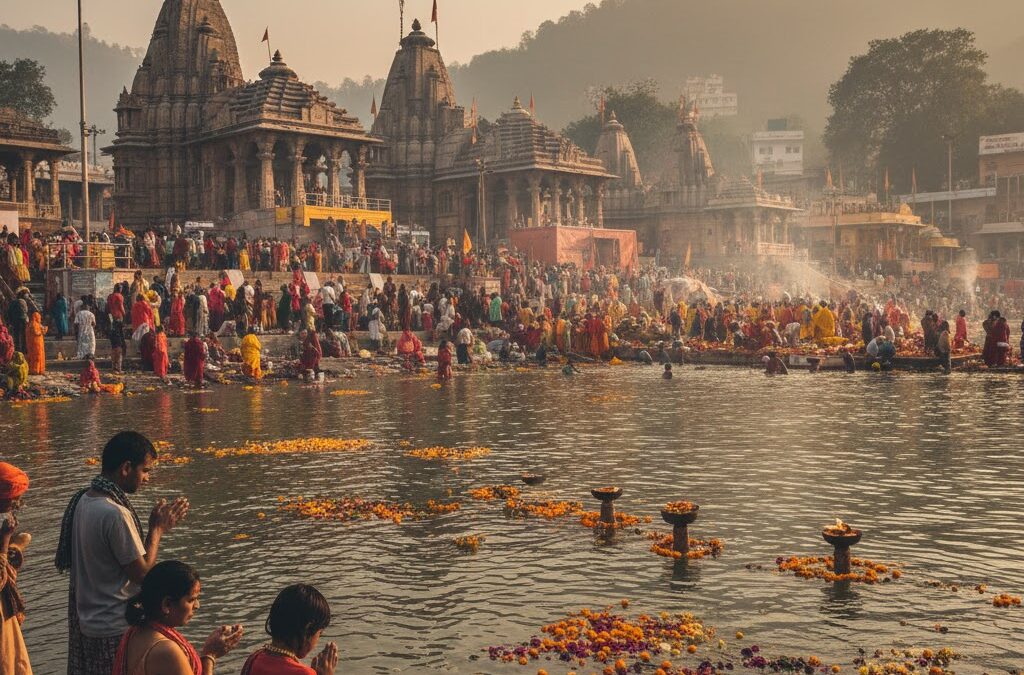
The holy river Ganga, also known as the Ganges, holds great cultural, religious, and ecological significance for India and the world. Here are some of the reasons why the river Ganga is considered so important.
Religious Significance
The river Ganga is considered sacred by Hindus and is worshipped as the Goddess Ganga. The river is believed to have descended to earth from the heavens, and bathing in its waters is believed to cleanse one’s sins and bring salvation. Several cities and pilgrimage sites, including Varanasi, Haridwar, Allahabad, and Rishikesh, are located on the banks of the River Ganga, and millions of devotees visit these places every year to take a dip in the holy waters.
Cultural Significance
The river Ganga is an integral part of Indian culture and has been celebrated in art, literature, and music for centuries. It has inspired poets, painters, and musicians, and its banks have been the site of several cultural and religious festivals, including the Kumbh Mela and the Ganga Dussehra.
Ecological Significance
The river Ganga is one of the largest river systems in the world and provides water to over 500 million people. The river basin is home to several endangered species, including the Ganges river dolphin, the Gharial (crocodile), and the Indian freshwater turtle. The river also plays a crucial role in agriculture and is used for irrigation and hydroelectric power generation.
Historical Significance
The river Ganga has been the site of several important historical events, including the birth and rise of several empires and the spread of Buddhism and Hinduism. The river has also witnessed several battles and wars, including the Mauryan and Mughal wars.
In summary, the holy river Ganga holds great significance for India and the world, and its importance can be traced back to its religious, cultural, ecological, and historical significance.
Let’s Find Some of the Famous Temples situated on the banks of the river Ganga.
Famous Temples On the River Ganges
There are several famous temples situated on the banks of the holy river Ganga. Here are a few of them:
Kashi Vishwanath Temple, Varanasi
The Kashi Vishwanath Temple is one of the most famous and revered temples in India. It is located in Varanasi, on the banks of the river Ganga. The temple is dedicated to Lord Shiva and is one of the twelve Jyotirlingas in India. The temple has been destroyed and rebuilt several times throughout history, with the current structure dating back to the 18th century. The temple complex also includes several smaller shrines dedicated to various deities.
Har Ki Pauri, Haridwar
Har Ki Pauri is a ghat located in Haridwar, on the banks of the river Ganga. It is one of the most sacred places in Hinduism and is believed to be the place where Lord Vishnu left his footprint. The ghat is also the site of the Kumbh Mela, a major Hindu festival that attracts millions of devotees from all over the world. The ghat is also famous for the daily Ganga Aarti, a ritual in which priests light lamps and offer prayers to the river.
Gangotri Temple, Uttarakhand
Gangotri Temple is located in the town of Gangotri, in Uttarakhand. It is one of the four Char Dham pilgrimage sites and is dedicated to Maa Ganga. The temple is believed to be the source of the river Ganga and is situated at an altitude of over 3,000 meters above sea level. The temple is open only for six months a year, from May to October, due to extreme weather conditions in the region.
Triveni Sangam, Allahabad
Triveni Sangam is the confluence of three rivers – the Ganga, the Yamuna, and the Saraswati, in Allahabad. The place is considered holy by Hindus and is believed to be the place where drops of nectar fell during the churning of the ocean by the gods and demons. The site is also the location of the Kumbh Mela, the largest human gathering in the world. Several temples and ashrams are located on the banks of the river at Triveni Sangam.
Kedarnath Temple, Uttarakhand
Kedarnath Temple is located in the town of Kedarnath, in Uttarakhand. It is one of the Char Dham pilgrimage sites and is dedicated to Lord Shiva. The temple is located at an altitude of over 3,500 meters above sea level and is surrounded by snow-capped mountains. The temple is only accessible on foot and remains closed for six months a year due to heavy snowfall in the region. The temple is believed to have been built by the Pandavas during the Mahabharata era.
Let’s find some famous fairs and festivals celebrated on the banks of the river Ganga.
- Kumbh Mela
- Ardh Kumbh Mela
- Ganga Dussehra (Gangavatara)
- Magha Purnima
- Somwati Amavasya or Mauni Amavasya
- Snan Parv or Kartik Purnima or Dev Deepawali
- Magh Sankranti or Magh Snan Parv
- Chhath Puja and Chhathi Maiya
Conclusion
The holy river Ganga stands as an unparalleled symbol of India’s spiritual, cultural, and natural heritage. From its divine descent, celebrated in Hindu culture, to its vital role as a lifeline sustaining millions, the Ganga’s importance transcends mere geography. It is a constant source of devotion, drawing pilgrims to sacred sites like Varanasi’s Kashi Vishwanath Temple and Haridwar’s Har Ki Pauri. The river’s banks are vibrant stages for global gatherings like the Kumbh Mela and the deeply felt Ganga Dussehra festival. However, its continued significance relies heavily on collective stewardship. Preserving the Ganga’s ecological health is not just an environmental imperative but a commitment to safeguarding a spiritual and historical legacy for generations to come. The Ganga is more than a river; it is the enduring soul of India.