
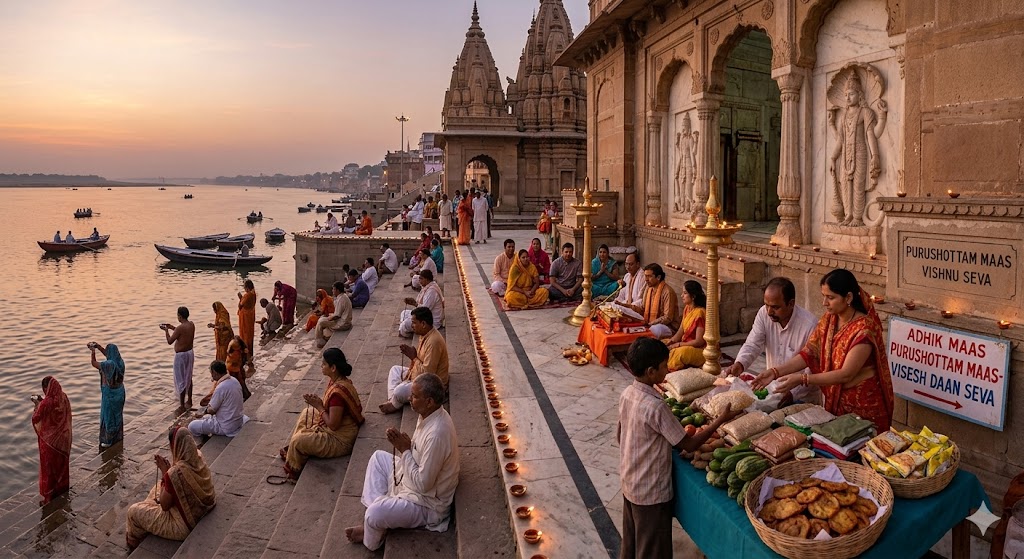
Adhik Maas, also known as Purushottam Maas or Mal Maas, is an additional lunar month that occurs in the Hindu lunar calendar approximately once every three years. ‘Adhik’ means ‘extra’ or ‘additional’ in Sanskrit. It is inserted to harmonize the lunar calendar with the solar calendar, as the lunar year consists of approximately 354 days, while the solar year consists of approximately 365 days.
Adhik Maas is considered a unique and auspicious month in Hinduism. It does not have a specific ruling deity like other months, but Lord Vishnu is often associated with this extra month. It is believed that Lord Vishnu himself resides in Adhik Maas and bestows blessings upon his devotees during this period.
Adhik Maas is considered a highly significant period for performing religious activities, worship, meditation, and penance. Devotees engage in extra devotional practices, such as offering prayers, fasting, reading sacred scriptures, and engaging in acts of charity. It is seen as an opportunity for cleansing of sins, worshipping the Lord, and seeking the grace of the divine.
The observance and practices during Adhik Maas may vary based on regional customs and personal beliefs. It holds special importance in Hinduism, and it is dedicated to Lord Vishnu. It is believed that offering prayers to Shri Hari Vishnu and fasting during this month is highly rewarding.
Also Read: Importance of Lord Vishnu Puja during Adhik Maas
So, let’s get to know more about the Date, Rituals, and Significance of Aadhik Maas 2026.
Adhik Maas 2026: Date, Muhurat, and Timings
This year, Adhik Maas will start on Sunday, May 17, 2026, and it will end on Monday, June 15, 2026
- Adhik Maas: May 17, 2026
- Adhik Maas: June 15, 2026
Find Out Date and Muhurat of Adhik Maas Purnima 2026
Significance of Adhik Maas/Maal Maas
Adhik Maas is considered a sacred month and is known by various names such as Londa Maas, Purushottama Maas, Mal Maas, and more.
In Hinduism, each month is associated with a specific deity. However, initially, Adhik Maas was not included among the 12 months. Adhik Maas appealed to Lord Vishnu to grant it a place in the calendar. Responding to its plea, Lord Vishnu allowed Adhik Maas to be included in the Hindu calendar.
Adhik Maas is considered holy because it is believed that engaging in virtuous deeds, prayers, and spiritual practices during this month can lead to the redemption of sins for individuals. It is seen as an auspicious time for spiritual growth and seeking forgiveness.
According to the Vedic Puranas, the human soul is composed of the elements of water, air, earth, fire, and sky. Practices such as meditation, offering prayers, chanting mantras, and worshipping Lord Shri Vishnu bring peace, abundance, and wealth while removing the negative energy from one’s life. Engaging in religious activities during the entire month of Adhik Maas can aid in purifying and enhancing both spiritual and physical energy. This special month, which occurs approximately once every three years, serves as an opportunity for rejuvenation and renewal. Additionally, it is believed that indulging in religious activities during Maal Maas helps resolve Kundali Dosha, an unfavorable alignment in the horoscope, and blocked energy.
Also Read: How to Perform in Navgrah Dosh Puja
Find out how to participate in Purnima Puja
Adhik Maas Purnima 2026 Rites and Rituals
During Adhik Maas, devotees participate in various Vedic rituals and practices to seek divine blessings. Here are some common rituals followed during Adhik Maas:
Vishnu Puja: Worshiping Lord Vishnu is considered auspicious during Adhik Maas. Devotees offer prayers, perform aarti, and recite Vishnu mantras to seek His blessings and grace.
Fasting: Observing fasts during Adhik Maas is believed to be highly beneficial. Devotees may choose to observe complete fasts or partial fasts by consuming only specific types of food.
Charity and Donation: Engaging in acts of charity and donating to the needy is considered virtuous during Adhik Maas. Offering food, clothes, or other essentials to the less fortunate is believed to earn blessings and good karma.
Study of Sacred Texts: Devotees dedicate time to studying sacred scriptures, such as the Vishnu Purana, Srimad Bhagavatam, Bhagavad Gita, or other spiritual texts, during Adhik Maas. Reflecting on the teachings and wisdom contained in these texts deepens spiritual understanding.
Japa and Mantra Chanting: Chanting of Vishnu mantras or performing japa (repetition) of sacred mantras associated with Lord Vishnu is a common practice during Adhik Maas. This practice helps focus the mind and invoke divine energy.
Pilgrimage and Holy Dip: Many devotees undertake pilgrimages to sacred places and take holy dips in rivers, especially the Ganges, Yamuna, or other sacred water bodies. Bathing in these rivers during Adhik Maas is believed to cleanse the soul and wash away sins.
Performing Homas and Havans: Conducting homas (fire rituals) and havans (sacred fire ceremonies) dedicated to Lord Vishnu or other deities is considered auspicious during this month. These rituals involve offering ghee, herbs, and other sacred materials into the fire while reciting mantras.
Devotional Practices: Engaging in devotional practices like singing bhajans (devotional songs), participating in satsangs (spiritual gatherings), and attending religious discourses are encouraged during Adhik Maas.
It is believed that offering prayers, participating in pujas, homas, and yagyas, as well as worshipping Lord Vishnu during this period, is highly beneficial and brings in abundance.
Also Read: How to Perform Lord Vishnu Puja?
Mythological Legends Behind Adhik Maas
Let’s find here some of the famous Vedic stories related to Adhik Maas.
Adhik Maas, also known as Mal Maas, Malim Maas, or Purushottama Maas, holds great significance in Hinduism. It is believed to have the power to absolve sins and attract divine energy. The lunar calendar consists of 12 months, and to align it with the solar calendar, the rishis and munis included the extra month known as Adhik Maas. However, Adhik Maas was initially overlooked as each of the 12 months represented a specific deity. The plight of Adhik Maas, also called Mal Maas or Malimmucha, was presented to Lord Vishnu, who took compassion and assigned Himself to this additional month, renaming it Purushottama Maas. Since then, Adhik Maas has gained more significance than the other months.
Another legend goes like this. In ancient times, King Nahush was freed from his bondage and ascended to the throne of Indra, the king of the gods and ruler of the heavens, through the observance of Mal Maas Vrat.
During Adhik Maas, various religious rituals are performed, including fasting, recitation of scriptures, mantra japa, prayers, puja, and havans. Different types of vratas (fasts) are observed based on an individual’s capacity, ranging from full-day fasts to weekly or fortnightly fasts. These rituals help in purifying one’s soul and washing away accumulated sins from this life and past lives.
Observing a fast during Adhik Maas is believed to be equivalent to performing a hundred yagyas (sacred fire rituals) and brings happiness, peace, and harmony. The purpose of following this vrat is to appease the deities, fulfill desires, attain health and wealth, receive blessings, overcome difficulties, and break the cycle of rebirth.
Engaging in good deeds (satkarmas) during Adhik Maas helps in mastering the senses, eliminating miseries, and escaping the cycle of rebirth (punar janam).
Overall, Adhik Maas is a sacred month that offers devotees the opportunity to seek spiritual growth, cleanse their souls, and seek blessings from the divine through various rituals and acts of devotion.
Benefits of Observing Adhik Maas
Observing Adhik Maas is believed to bring several benefits. Here are some of the potential advantages.
- Observing fast during the month of Adhik is equivalent to a hundred yagyas and acts to elevate peace, happiness, and health.
- Observing Adhik Maas appeases deities and helps to fulfill desires.
- It helps to move ahead on your spiritual journey.
- Selfless acts help to elevate the soul and bring tranquility.
- By participating in the Navgrah Dosha puja during this month, one can get relief from the malefic effects in the horoscope.
- Pilgrimage during this period is regarded as highly sacred and beneficial.
- Reciting Lord Vishnu mantras during this month is believed to attract wealth and prosperity.
- Feeding needy and poor people during this Maal maas helps gain opulence and fame.
Dos and Don’ts During Adhik Maas
Adhik Maas, also known as the extra lunar month, is believed to be under the dominion of Lord Vishnu. The legends associated with Lord Krishna and Lord Narasimha are closely connected to this auspicious month. It is considered appropriate to worship these deities through Vishnu Puja during Adhik Maas. Devotees believe that by worshiping Lord Purushottam and observing fasting during this month, they can free themselves from misery, poverty, and the burden of sins.
Religious texts such as the ‘Vishnu Purana,’ ‘Srimad Bhagavatam,’ and ‘Bhagavad Gita’ are recommended for study during Adhik Maas. Acts of charity are also considered highly rewarding during this time.
Chanting Vishnu Mantras throughout the month is believed to be blessed by Lord Vishnu himself, leading to the forgiveness of sins. For those observing fasting during Adhik Maas, it is customary to consume only one meal a day, excluding three specific days. Additionally, the food consumed should be of ‘Satvik’ quality, promoting a spiritual connection with the divine.
Engaging in religious activities and practices during Adhik Maas is said to yield benefits multiplied by ten. Lord Vishnu’s blessings are believed to guide individuals towards their destined paths in life.
From a health perspective, Adhik Maas is considered highly beneficial as it rejuvenates and purifies both the inner and outer being, filling one with fresh energy.
Also, it is important to know that this Purushottam or Adhik Maas is not regarded as sacred to perform any auspicious works. All auspicious works, including marriage ceremonies, house warming ceremonies, purchasing new items, etc., should be avoided during Adhik Maas in the Hindu calendar. On the other hand, at the same time, Adhik Maas is very significant to perform austerity and participate in various pujas and yagyas to easily please Lord Vishnu.
It is important to note that these beliefs and practices may vary across different regions and traditions within Hinduism.
Learn about the Religious Benefits of Fasting during Adhik Maas