
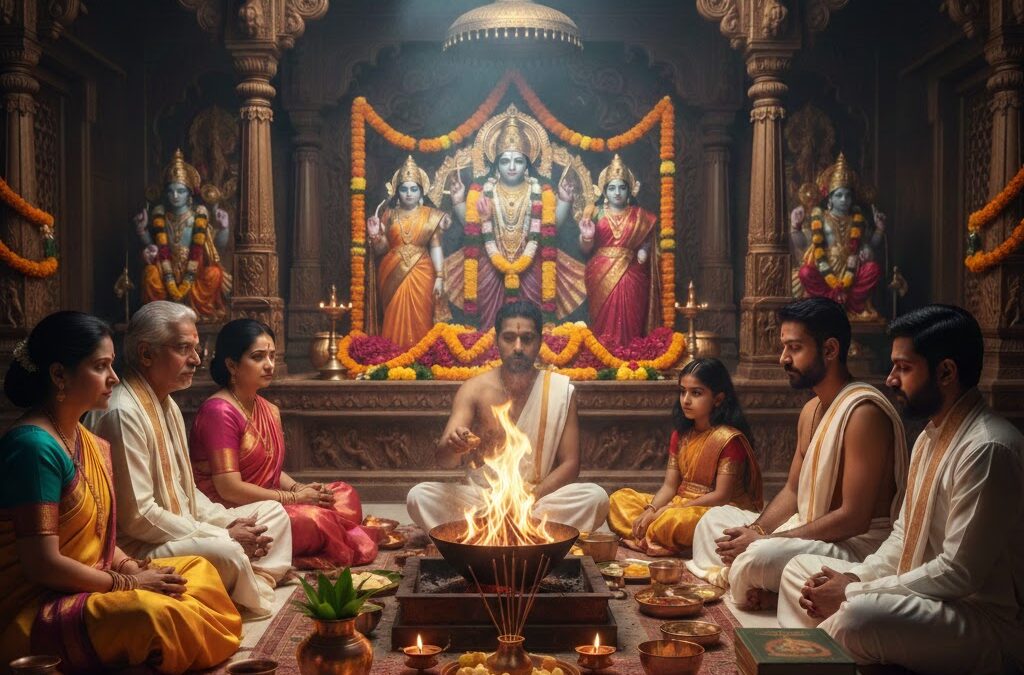
A Sacred Path to Truth and Prosperity
Satyanarayan Vrat Katha Puja is a highly sacred Vedic ritual that many devotees participate in and perform to attract wealth, abundance, and fulfilment of desires. It is dedicated to Lord Vishnu as Satyanarayan, the embodiment of Satya (truth) and Ananda (divine bliss). Ancient texts like the Skanda Purana describe it as a vrata that can be observed by anyone—irrespective of caste, gender, or social status—making it one of the most inclusive Hindu observances.
Traditionally performed on Purnima (full-moon days) or during significant milestones such as marriages, Griha Pravesh (housewarming), and the start of a new business, this puja invites auspiciousness, dissolves past karmic hurdles, and strengthens a devotee’s resolve to walk the path of dharma.
Significance of Satyanarayan Vrat
In the Reva Kanda of the Skanda Purana, Lord Vishnu Himself reveals the importance of this vrata to Sage Narada. According to the scripture, anyone who performs it with faith and honesty will be relieved of sins, freed from rebirth-inducing karma, and blessed with health, wealth, and happiness.
This vrat katha teaches the essential essence of life that is: Satyam Vada, Dharmam Chara—to live truthfully and righteously. Usually, this puja is performed on auspicious days like Purnima, Ekadashi, or during a sacred planetary transit. It is believed that participating in Satyanarayan Vrat Katha on auspicious days not only amplifies its power but also that the benefits are multiplied.
The vrata emphasizes samuhik bhakti (collective devotion), where family and relatives come together, strengthening social bonds through shared recitation and prasad distribution.
Satyanarayana Vrat Katha and Puja Vidhi
Preparatory Steps
- Sankalp (Sacred Oath): After a morning bath, devotees take a sankalp facing east, promising to perform the vrata with sincerity for the welfare of family and society.
- Altar Arrangement: Place a clean wooden plank, spread a red or yellow cloth, and set a Kalash filled with water, mango leaves, and a coconut wrapped in red cloth symbolizing the cosmos.
- Offerings: Prepare Panchamrit (milk, ghee, honey, curd, sugar), tulsi leaves, seasonal fruits, betel leaves, incense, and the traditional Sheera/Halwa prasad.
Puja Procedure
- Ganapati and Navagraha Vandana: Begin by invoking Lord Ganesha and the nine planetary deities to remove obstacles and balance cosmic energies.
- Invocation of Shri Vishnu: Chant the Om Namo Bhagavate Vasudevaya mantra while sprinkling Gangajal (holy water) to sanctify the space.
- Five-Chapter Katha Recitation:
- First Chapter: Lord Vishnu narrates the glory of Satyanarayan Vrat to Sage Narada.
- Second–Fourth Chapters: Stories of a poor Brahmin, a merchant named Sadhu, King Ulkamukha, and King Tungadhwaja illustrate the rewards of devotion and the perils of neglect.
- Fifth Chapter: Highlights the importance of keeping one’s promises and concludes with universal blessings.
- First Chapter: Lord Vishnu narrates the glory of Satyanarayan Vrat to Sage Narada.
- Aarti and Prasad: Light ghee lamps, sing the Satyanarayan aarti, and distribute prasad to every participant, symbolizing shared grace.
Also, know about the Puja Vidhi of Lord Vishnu Puja here
Mistakes to Avoid (As Warned in Scriptures)
- Incomplete Katha: The Skanda Purana clearly states that skipping chapters or rushing through the story nullifies the vrata’s merit.
- Unclean Space or Mind: Both physical impurity and negative emotions like anger dilute the sanctity of the puja.
- Breaking the Fast Prematurely: Devotees should consume only after the Katha and prasad distribution.
- Withholding Prasad: Scriptures emphasize that everyone present, including children and guests, must receive prasad; withholding it is considered disrespectful to Lord Vishnu.
- Casual Attitude Toward Sankalp: The vrata demands inner commitment; performing it mechanically for material gain weakens its spiritual potency.
Benefits of Satyanarayan Vrat
- Worldly Prosperity: Blessings of wealth, success in ventures, and relief from debts are frequently mentioned in the Padma Purana.
- Health and Longevity: Believed to remove chronic ailments and promote mental peace through divine protection.
- Spiritual Upliftment: Regular observance purifies the mind, strengthens faith, and leads toward moksha (liberation).
- Karmic Relief: The Katha stories illustrate how even grave sins—when followed by sincere devotion—are forgiven by the compassionate Lord Vishnu.
- Family Harmony: Performing the puja as a household creates collective positive karma and fosters love and unity.
Also, find the benefits of participating in Lord Vishnu Puja
Conclusion
The Satyanarayan Vrat Katha Puja is far more than a ritual; it is a living tradition that weaves together truth, devotion, and community spirit. Rooted in the Skanda Purana, it shows that when humans align with Satya (truth) and offer heartfelt prayers to Lord Vishnu, divine grace flows effortlessly. Whether you are celebrating a joyous milestone, seeking solutions to life’s challenges, or simply expressing gratitude, performing this vrata with a pure heart ensures spiritual fulfillment and material well-being for generations to come.
Trackbacks/Pingbacks